How the Flock
Builds Ask Mallard
The story: a flock builds a nest
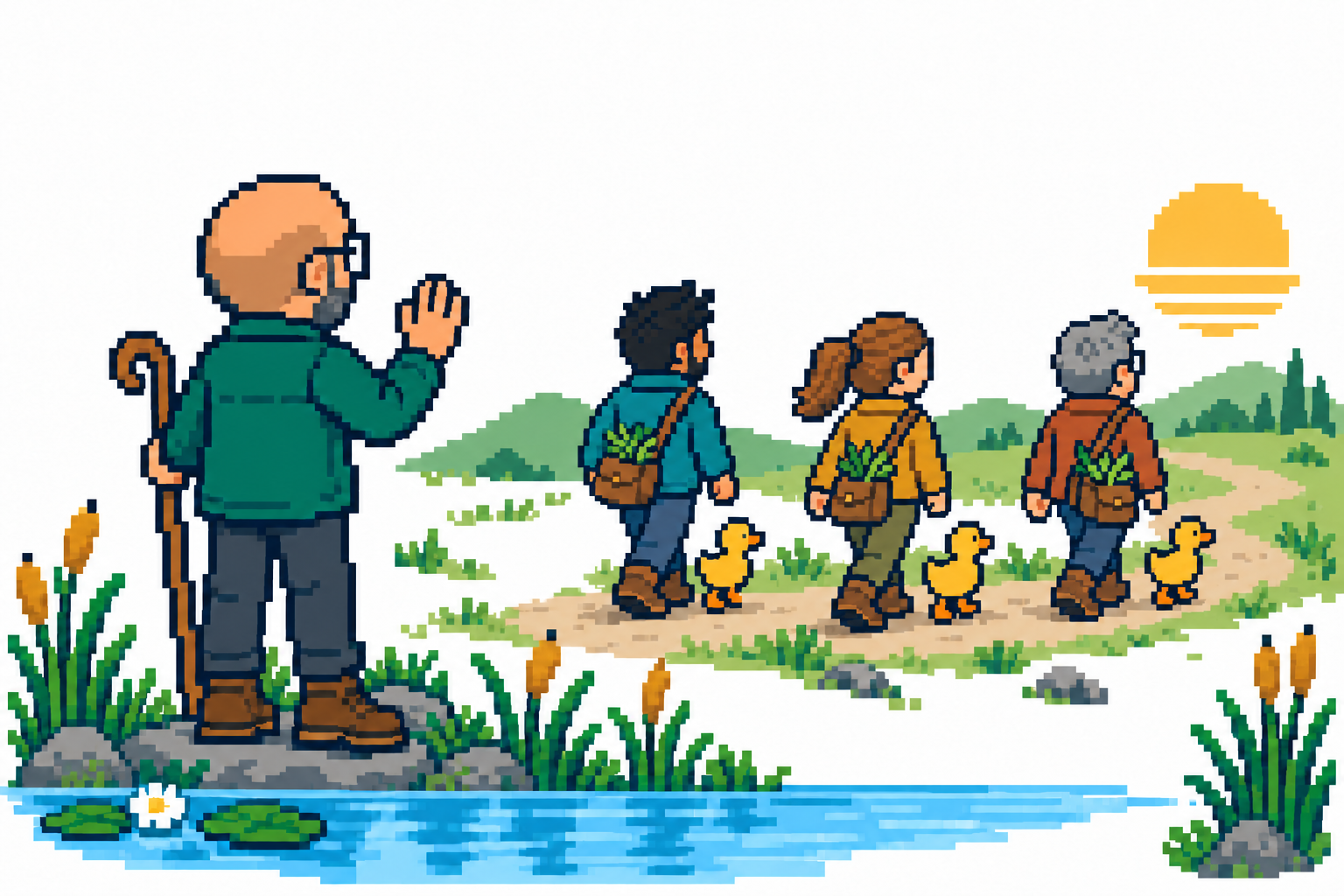
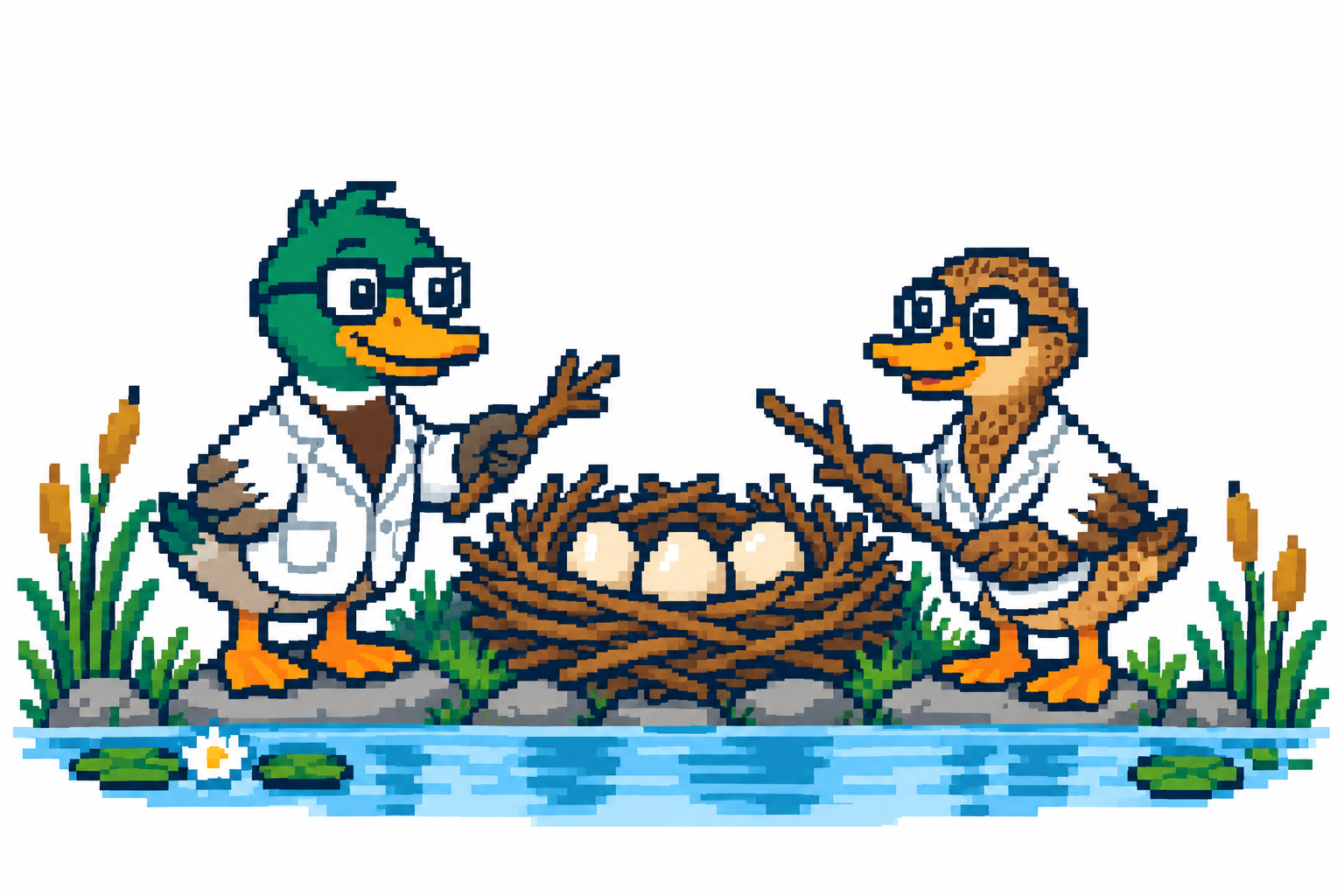
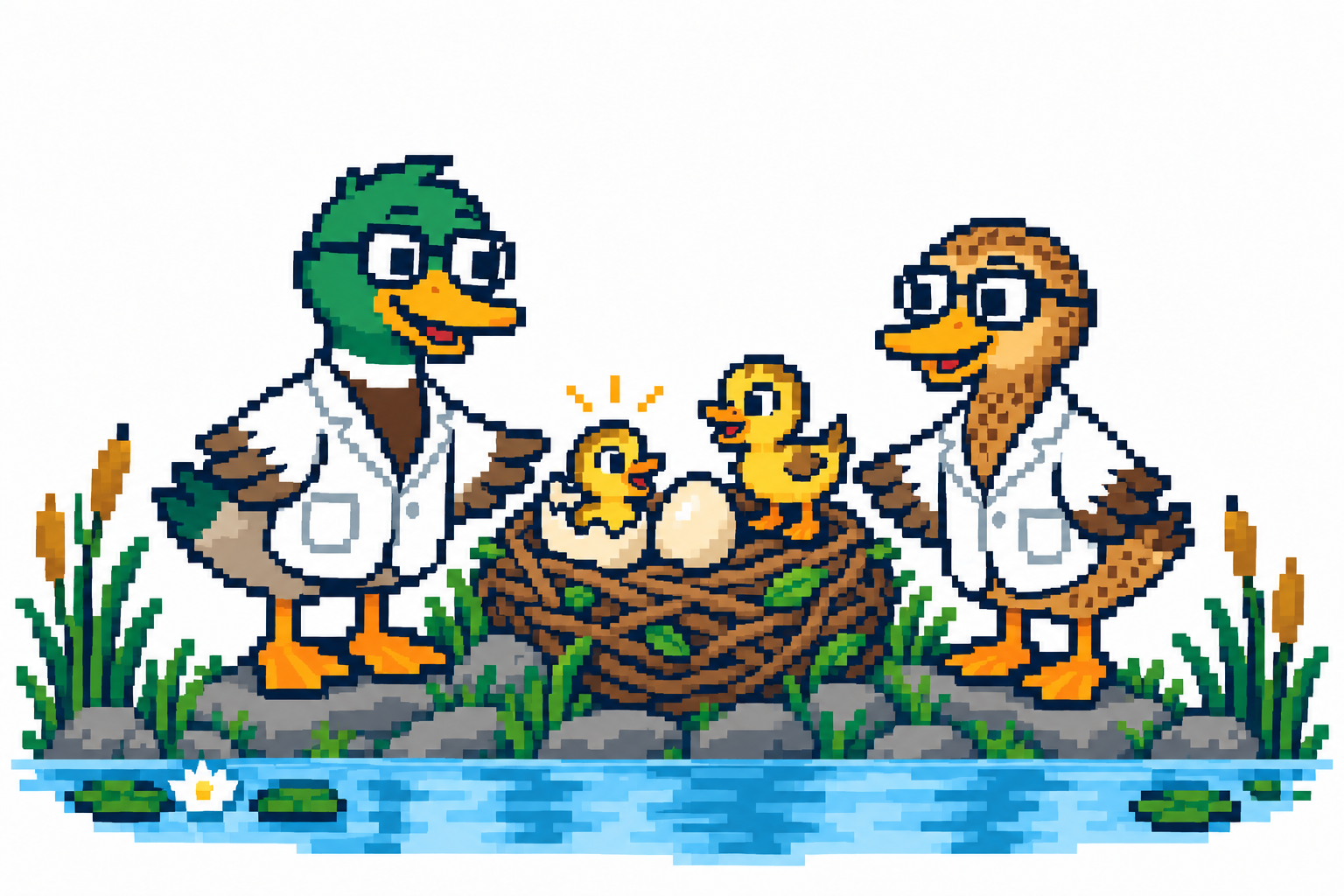
This is a story about how a flock of mallards builds a nest. At its heart are two mallards, a drake and a hen, who build it together, each leading a flock of helpers. Before any twig goes into the nest, the other bird checks that it is strong. Watching over them is the mallard shepherd, crook in hand, who decides where the nest goes and how it should be built.
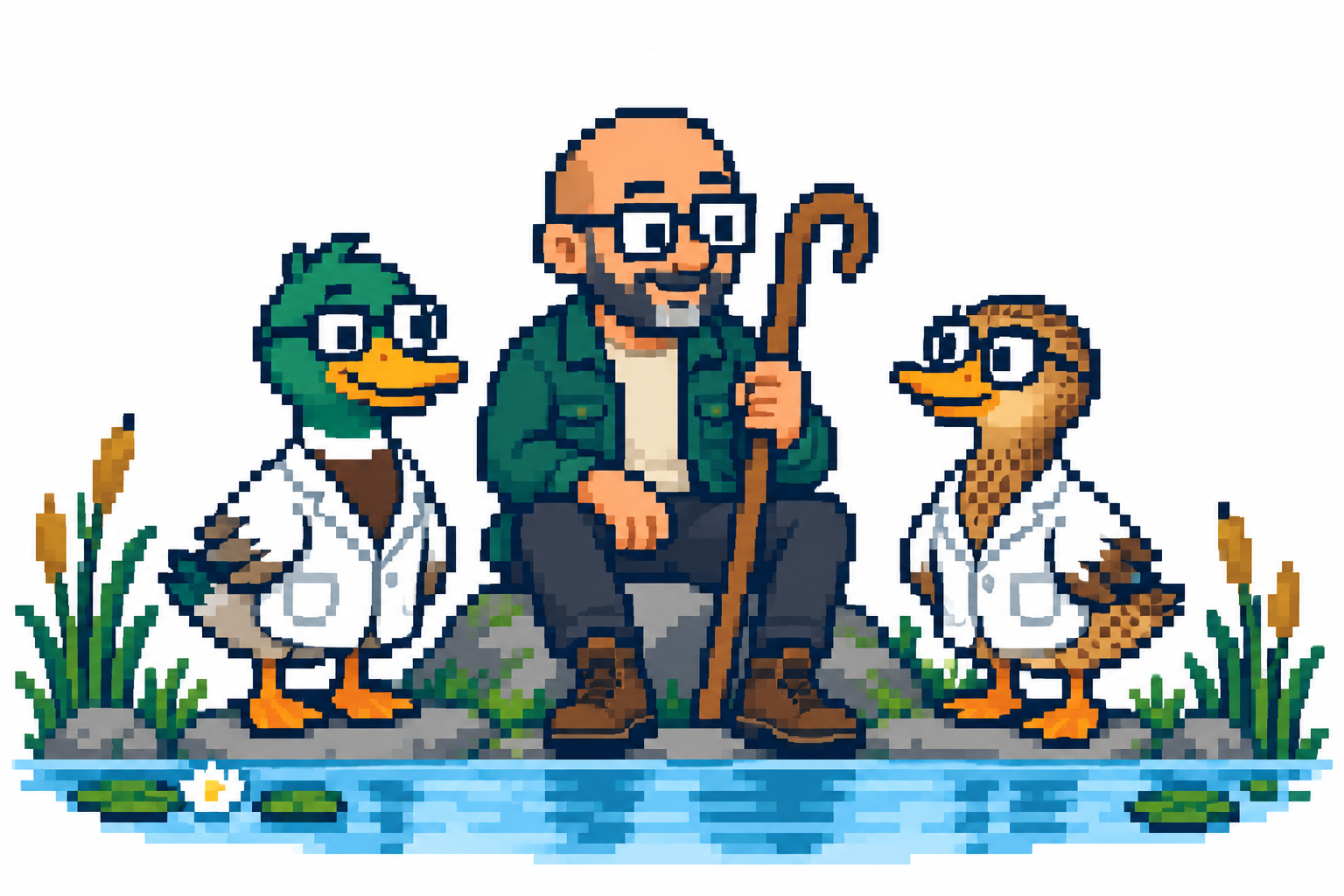
Ask Mallard is built the same way. The founder is the mallard shepherd, deciding what gets built and making the important choices along the way. The drake is Claude Code, made by Anthropic. The hen is Codex, made by OpenAI. Both are AI coding assistants that read, write and test software from instructions in plain English. The normal release process requires automated tests before a change reaches the live website, and an independent review by the other mallard for changes to how the app behaves. Both run on tokens, the small pieces of text an AI reads and writes. Each subscription has usage limits, the way a bird has only so much energy to flap its wings before it must rest.
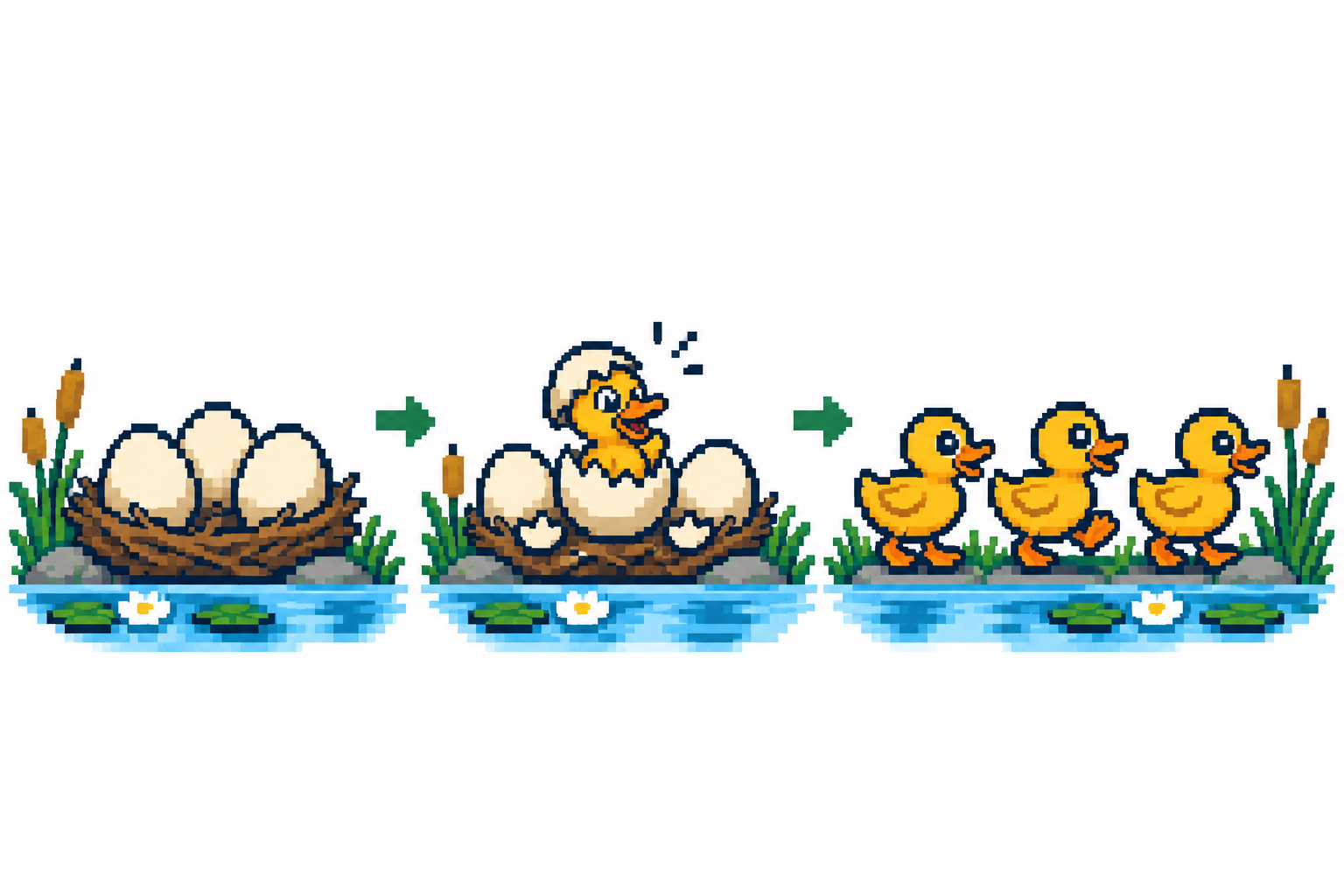
A nest exists for its eggs. In Ask Mallard, the eggs are the study plans the app generates for clinicians. When a plan hatches, it becomes a duckling: a new research idea on its way to becoming a real study. Everything in this story exists to keep those eggs safe.
Ask Mallard is a learning research system. A learning health system feeds what it learns from each patient back into the care of the next. In the same way, Ask Mallard uses validated findings from its own code and the plans it writes to strengthen checks for later work. Each lesson can make the nest a little stronger for the next egg.
To see how it works, follow one illustrative request through the story. One evening, the founder types on a phone: "Add a calculator that tells a clinician how many months of data they need for a before-and-after study."
Three more pieces complete the story:
- GitHub is the nest. It is the online service where the app's code lives, with a complete history of every change. Every twig the mallards add is recorded there. A proposed twig, held on GitHub for testing and review before it is woven in, is called a pull request.
- The lookout is another mallard. It represents the release coordinator, a separate Claude Code or Codex AI session. While the two builder mallards lead their flocks, the lookout watches which changes are ready to go live and in what order.
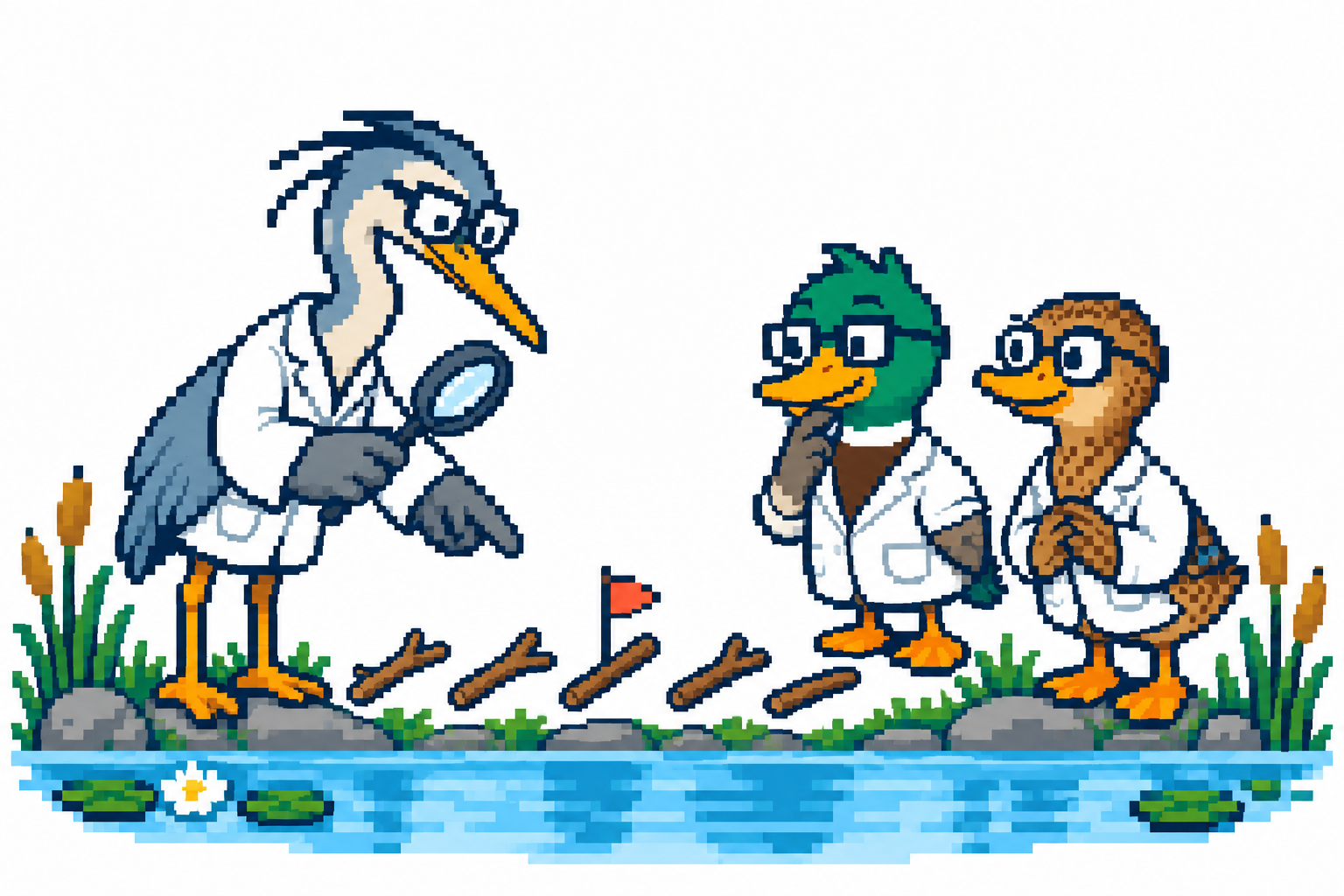
- GitHub Copilot is the heron on the bank. It is GitHub's own AI code reviewer. Like a heron watching from the reeds, it is asked to inspect proposed twigs and call out problems, but it never touches the nest itself.
Part 1. Building the nest: how the app is developed
The flock takes flight: one instruction, many helpers
One instruction sends out a flock of AI helpers, and every result is checked
The mallard shepherd
The founder, decides what to build
Claude, the drake
Lead session, hands out work
- Research
- Write code
- Write tests
- Check Codex
Proposed changes to GitHub
The lookout
Decides what goes live, when
- Readiness
- Release order
- Fix overlaps
- Status notes
Reads ready changes from GitHub;
sends approved ones on
Codex, the hen
Lead session, hands out work
- Write code
- Write tests
- Live testing
- Check Claude
Proposed changes to GitHub
GitHub, the nest where the code lives
Every proposed change requires tests and a Copilot review request. Classes B–D also require an independent mallard review.
Copilot, the heron
Reviews proposed changes; flags problems
Does not edit or release.
The mallard shepherd (the founder) sends the request to one of the two mallards, Claude the drake or Codex the hen: whichever has more energy to flap its wings that evening (more of its AI usage allowance left). This time it goes to the drake (Claude's lead session), one of a few coordinators the founder talks to. He breaks the job into pieces and sends out his flock (smaller AI helpers). One helper studies the calculators Ask Mallard already has, one builds the new one, one writes tests, and one drafts the Learn page that explains it. Meanwhile, the lookout (a release coordinator, another AI session) keeps watch over what is ready to go live, and in what order.
Two flocks, one nest: how Claude and Codex work together
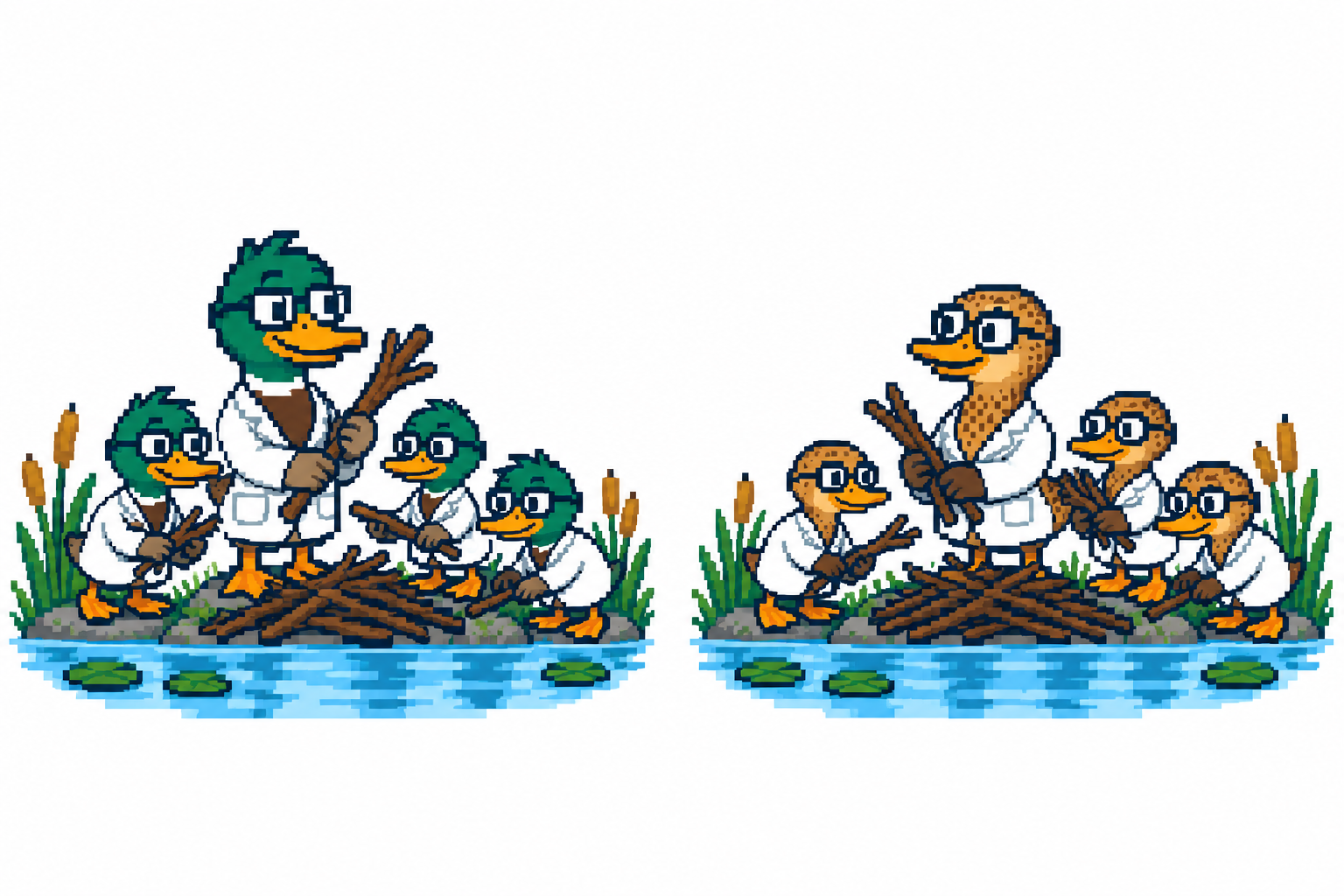
While the drake's flock builds the calculator, the hen's flock (Codex's helpers) may be at work elsewhere in the app. A few simple rules keep them from getting in each other's way.
- One rulebook. Like a flight plan every bird in the flock follows, both mallards work from the same written project rules: a file called CLAUDE.md for Claude and its twin, AGENTS.md, for Codex. They also keep a shared status file, CURRENT_STATE.md, like a note left at the nest saying how far the building has come, so either can pick up where the other left off.
- Separate patches of nest reeds (code files). Like each bird keeping to its own patch, every session reserves the exact files it will change in a shared task registry, and works in its own copy of the code (a git worktree). The calculator's files belong to Claude until the work is done, and local hooks block supported edits outside a reservation. They do not cover every way a file can be changed.
- Work goes where there is capacity. Each assistant has a usage allowance, its energy for flapping its wings. A small program, the capacity coordinator, reports what is left. Its readings help the founder choose; they do not automatically block or reroute work. Had Claude been near its limit that evening, the founder could have sent the calculator to Codex instead.
- One builds, the other checks. The assistant that offers a twig (pull request) cannot supply its independent review. Instead an uninvolved mallard checks that twig before it is woven in, which the project calls a cross-lab review. Claude, the drake, built the calculator, so Codex, the hen, reviews it. If both helped build it, neither qualifies as its independent reviewer.
- Higher risk, deeper review. Every change gets a change risk class from A to D, pictured below as a loose feather, a new twig, a twig that touches the eggs, or the nest's walls and gate. Cosmetic wording changes that cannot alter behaviour need only automated tests. Changes to how the app behaves get an independent review. Changes to statistical advice, patient privacy, sign-in or billing also need the founder's sign-off, so the calculator will come back to the founder before it goes live.
The riskier the change, the more checks it must pass
Every change is sorted into a class by how much harm a mistake could do.
A loose feather
Cosmetic wording and looks only; no behavior change.
For example, fixing a typo on a page.
- Automated tests
- Required
- Other mallard reviews it
- Not needed
- Founder’s plan and test questions
- Not needed
- Founder signs off
- Not needed
A new twig
Changes how the app behaves or its working instructions
For example, a new button or screen.
- Automated tests
- Required
- Other mallard reviews it
- Focused
- Founder’s plan and test questions
- Not needed
- Founder signs off
- Not needed
Touches the eggs
Changes what a clinician is told
For example, sample-size advice.
- Automated tests
- Required
- Other mallard reviews it
- Deep
- Founder’s plan and test questions
- Required
- Founder signs off
- Required
The nest’s walls and gate
Sign-in, patient privacy, billing
For example, who can see a saved plan.
- Automated tests
- Required
- Other mallard reviews it
- Deep
- Founder’s plan and test questions
- Not needed
- Founder signs off
- Required
The calculator touches the eggs (Class C), so it needs every check: tests, a deep review by the hen, a written plan from the founder with a replay of test questions, and the founder's sign-off.
Why the nest holds: speed and fewer errors
Speed. Like a flock in formation, several AI sessions work at once, each on its own copy of the code (parallel sessions in separate git worktrees). The calculator, a sign-in fix and a new Learn article can all move forward on the same evening.
Fewer errors. AI tools from different companies may miss different things, the way two birds scan different patches of sky. That is why the independent development review is a cross-lab review. In our story, the hen questions one formula in the drake's calculator, and the answer is checked against R, widely used statistics software (the project calls these oracle tests), before work continues.
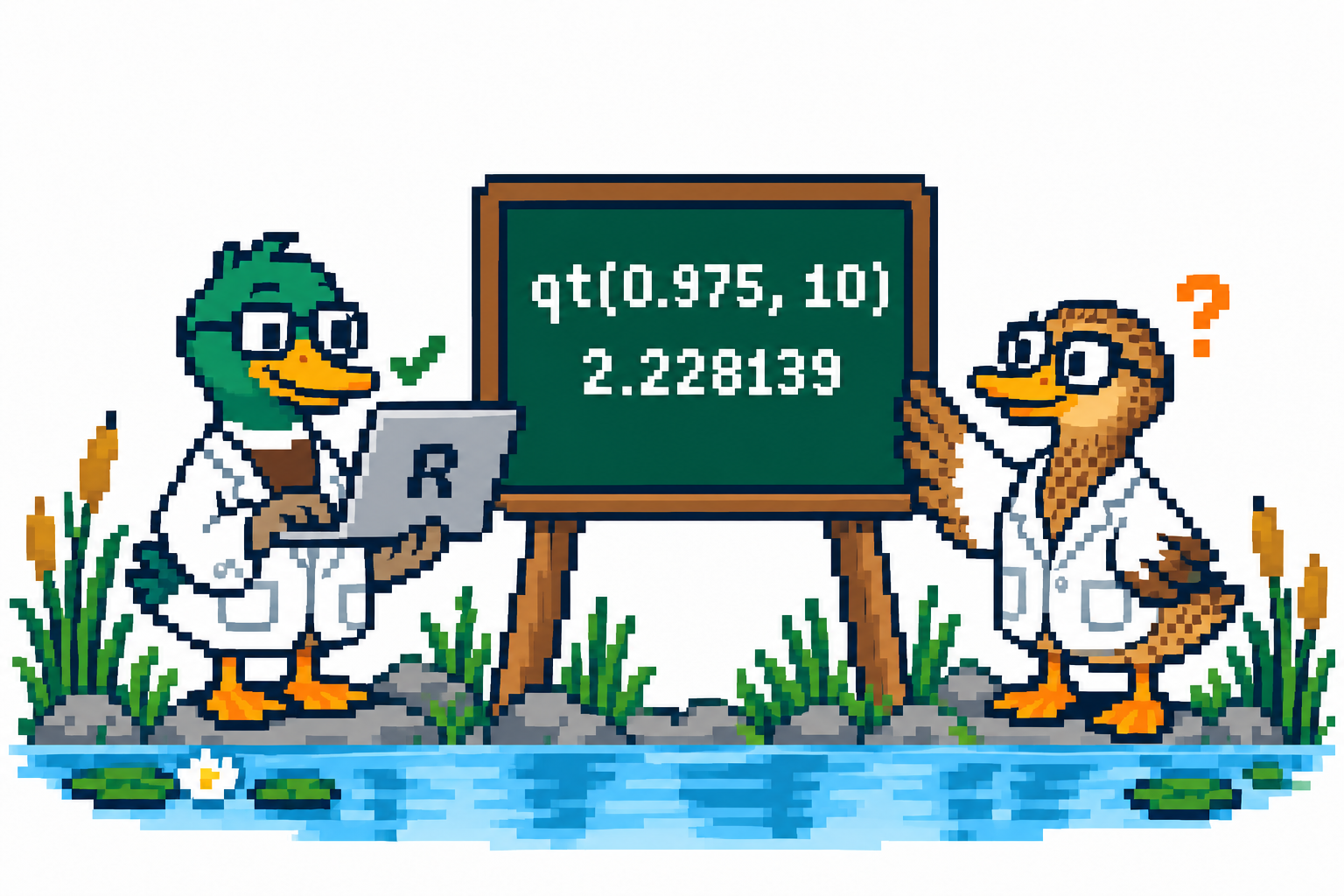
Validated findings become lasting safeguards. A validated finding leads to a new check or automated test (a regression test). It must catch the error and stay quiet on a real example that is sound. The system then deliberately puts the error back to prove the test notices, like knocking a twig loose to check that the alarm call sounds (a sabotage run). If the hen's question about the formula turns up a real mistake, that test stays in the nest, guarding the behaviour it tests in later versions. The same idea runs through the public Mallard Code Library, the R and Python reference code a plan's analysis starts from when the library holds a compatible method. Its execution record applies to the reference example; code adapted for a study has not been run. A library fix can help later plans once the app uses the updated reference.
The nest and the heron: GitHub and Copilot
In the normal development process, each proposed change starts as a pull request on GitHub, showing exactly what would change. Test results, review comments and sign-offs are recorded beside it, so the change can later be traced. The calculator arrives marked Class C, because it changes statistical advice. It is accepted only after it passes every check below.
- Automatic testing. Like testing every twig's strength before it is woven in, GitHub runs thousands of automated tests (continuous integration, or CI), including tests that click through the real app screens the way a clinician would.
- The heron, a third reviewer. GitHub Copilot is asked to review every proposed change; an unavailable review is recorded as not run. Like a heron on the bank, it can point out problems but cannot change anything. On the calculator, it flags a confusing label, and the drake fixes it. Every Copilot comment must end as fixed, rejected with a reason, or logged for later.
- Final release check. Like the lookout's last scan of the sky before takeoff, a small program checks the required tests and reviews. It reports "ready", "not ready" or "could not tell". The last two do not clear a change for release.
- Retest, then release. Approved changes wait in line, like ducks lining up on the water before takeoff (GitHub's merge queue). Each is retested against the latest version of the app, and then the website's host, Netlify, publishes it.
The nest is built: the calculator goes live
Back to the founder. Once every check passes, a short summary of the calculator arrives for sign-off, because it gives statistical advice. The founder approves. The change waits its turn, is retested alongside everything else released that day, and goes live on askmallard.com. It joins the calculators in Mallard Learn, beside articles such as Sample size and statistical power and Interrupted time series, and the glossary that explains each term.
The calculator is new, but most of what made it safe was already in the nest: the tests, the reviews, and the safeguards that earlier mistakes left behind. Validated lessons add to them, so later work can be built on firmer ground. The aim is a sturdier nest for the eggs it holds: the plans Ask Mallard generates, and the ducklings that hatch from them into real studies. That is the learning research system at work.
Part 2. Laying the eggs: how a study plan is made
Part 1 showed how the flock builds and guards the nest (the app). Now a clinician comes to the pond as the village healer, hoping for a duckling of their own. This part follows their question into a study plan, and then a study. The full method, including how each number is checked, appears in the Methods and validation reference.
From a healer's wish to a duckling: the app's six steps
From a healer’s wish to a duckling
The healer’s wish
Before the app: the clinician’s questionA research question, typed in everyday words.
The mallards listen
1 · In the app: TriageAims and hypotheses set, plus a PubMed literature scan.
Surveying the pond
2 · In the app: FeasibilityFunding, team, data sources and deadline, asked up front.
Choosing the nest site
3 · In the app: DesignA brief offers a design and alternatives; the clinician picks.
Forming the egg
4 · In the app: AnalysisThe analysis and sizing plan, with review before completion.
Readying the nest
5 · In the app: ExecutionWhat running the study takes, checked before enrollment.
The egg is laid
6 · In the app: Finalize, the study planMethods, references, code, and Word and PDF exports.
The duckling hatches
After the app: the study beginsIt goes home with the healer: the clinician runs the study.
Before the app: the healer's wish. The clinician types that wish as a study question in plain words on the study plan page, or uploads a document. Before submitted study text leaves their browser, Ask Mallard strips out the patient identifiers it recognizes (protected health information, or PHI). It cannot recognize every identifier, so clinicians must keep patient-identifying information out of what they submit.
Then the app's six steps begin:
- The mallards listen (Triage). An AI restates the question in clearer terms, proposes research aims and testable hypotheses (with alternatives), and checks that they fit together. An early literature scan then searches PubMed, the public index of medical research. It summarizes related studies, points out any gap the new study could fill, and suggests questions to take to a medical librarian.
- Surveying the pond (Feasibility). The clinician records funding, team, data sources and deadline. These shape what is reachable, but they never make a weaker method acceptable. Answers that contradict each other are flagged before going further.
- Choosing the nest site (Design). A design brief proposes a study design and alternatives, each with the conditions it depends on, and the clinician chooses. Harder designs, such as cluster randomized trials, are routed to a stronger drafting model. Then, just as the drake and the hen check each other's twigs, two AI reviewers from different companies (Anthropic and OpenAI) are asked to read the brief, and the drafter gets a corrective pass when needed. The record distinguishes reviews that ran, issues raised and revisions applied; a failed review is not a pass.
- Forming the egg (Analysis). The plan states its estimand: exactly which effect, in whom, measured how. Every number must agree with it. Where a supported calculation fits, the sample size is calculated with formulas tested against R. A sample size that contradicts the estimand is withheld. A design beyond the supported calculations, including some clustered designs, may need simulation; the app gives a sizing plan, and a statistician must still run that calculation. The same two reviewers are asked to read this draft too. When they raise issues, a final reader is asked to check what remains unresolved after revision. The reviewers are asked seven safety questions; missing answers remain unknown.
- Readying the nest (Execution). The plan sets out what running the study takes, and what to check before the first participant enrolls.
- The egg is laid (Finalize). The finished study plan includes an abstract and a protocol synopsis, and a background section with PubMed references, each marked as a record to confirm, not a proven claim. For each aim it gives methods, a sizing plan and a statistical analysis plan. It adds a proposed causal diagram where appropriate, results-table templates and illustrative figures, and analysis code in R and Python, which starts from the Mallard Code Library when it holds a compatible method. The illustrations are not study results, and the adapted code has not been run. It closes with open questions for the clinician's statistician or institution, Word and PDF exports, and links to the Mallard Learn pages that explain the design, where a calculator like the one the drake built in Part 1 may sit beside the article.
After the app: the duckling hatches. The duckling goes home with the healer: the clinician shares the plan with their team (the healer's helpers), their statistician (the vet, who gives the duckling a checkup) and their review board (the village council, which decides what oversight is required before it is raised). Once the required determinations and approvals are in place, they run the study, raising the duckling until it grows into a full-grown duck (the study's findings). The duck takes flight and is seen across the valley (the findings are published and shared). Healers in other villages consider what it means for the care of their villagers (clinicians assess whether the findings should change patient care). Those healers come back to the pond with new wishes, and the cycle begins again (new questions that start new studies).
Conclusion: a flock, a nest, and ducklings
Ask Mallard is built the way our mallards build their nest. The mallard shepherd decides what to build. Two flocks, the drake's and the hen's, do the building, and each inspects the other's twigs before they are woven into the nest. The heron and the lookout keep watch over the nest too, so it stays strong enough to nurture its eggs.
Inside that nest, every healer's wish follows the same six steps. The mallards listen, survey the pond, choose the nest site and form the egg with care, then ready the nest before the egg is laid, and the healer looks it over at every turn. When the egg hatches, the duckling the healer wished for goes home to be raised: a research idea on its way to becoming a real study. The shepherd watches from a distance.